AirWatch, Citrix Bring MDM to Intel-Powered Android Devices
Intel is lining up support for its Device Protection Technology (DPT), a layer of security that the chipmaker is adding to Atom processors that are optimized for Android 4.4 (KitKat), in a move that could help the company make gains in the mobile device market. Currently, Android is the world’s most popular operating system, but […]
Datamation content and product recommendations are
editorially independent. We may make money when you click on links
to our partners.
Learn More
Intel is lining up support for its Device Protection Technology (DPT), a layer of security that the chipmaker is adding to Atom processors that are optimized for Android 4.4 (KitKat), in a move that could help the company make gains in the mobile device market. Currently, Android is the world’s most popular operating system, but the vast majority of Android smartphones and tablets are powered by processors designed by its rival ARM.
AirWatch announced today that it will “provide same-day Intel DPT support” to help enterprises and government agencies that use the company’s EMM (enterprise mobility management) platform quickly deploy and secure Android devices. The combination of AirWatch EMM and Intel’s DPT enables remote device management, configuration and inventory capabilities.
On the mobile application management front, the technologies enable app whitelisting, blacklisting along with silent installation and removal. EMM allows administrators to perform network, container and expense management and DPT-enabled devices into a kiosk mode.
Users, on the other hand, should experience little change in how they use their devices — a vital part of extending Android’s user-friendliness to the workplace. “With the combined power of Intel DPT and AirWatch EMM, IT administrators will be able to effectively manage Android devices without infringing upon the native user experience,” claimed the company in a statement.
AirWatch’s president and CEO John Marshall asserted in a statement that Intel’s stab at mobile security “advances the manageability of Android devices within enterprises and government institutions by providing a robust security solution with policy-based data leakage protection for sensitive assets.” His company, he claimed is “the only EMM vendor that will provide same-day support for this new platform.”
Another major provider of mobile IT management solutions, Citrix, has pledged to support Intel DPT.
The virtualization company said its Citrix XenMobile offering will enable organizations to implement hardware and software safeguards that protect corporate data on Intel DPT-enabled Android devices without intruding on the end-user experience. By embracing the chipmaker’s technology, “XenMobile will provide IT with full administrative visibility and control,” stated the company.
Citrix’s Amit Pandey, Vice President and General Manager of the company’s Mobile Platforms Group, said in a statement that Intel DPT support builds on his company’s past collaborations in client virtualization. “Together, we are enabling enterprises to mobilize their employees by delivering security and manageability while providing a seamless user experience,” he said in a statement.
Pandey predicts that the team-up spells good news for Android in the workplace. “This helps accelerate the adoption of Android devices in the enterprise,” he added.
Pedro Hernandez is a contributing editor at Datamation. Follow him on Twitter @ecoINSITE.
Pedro Hernandez is a contributor to Datamation, eWEEK, and the IT Business Edge Network, the network for technology professionals. Previously, he served as a managing editor for the Internet.com network of IT-related websites and as the Green IT curator for GigaOM Pro.
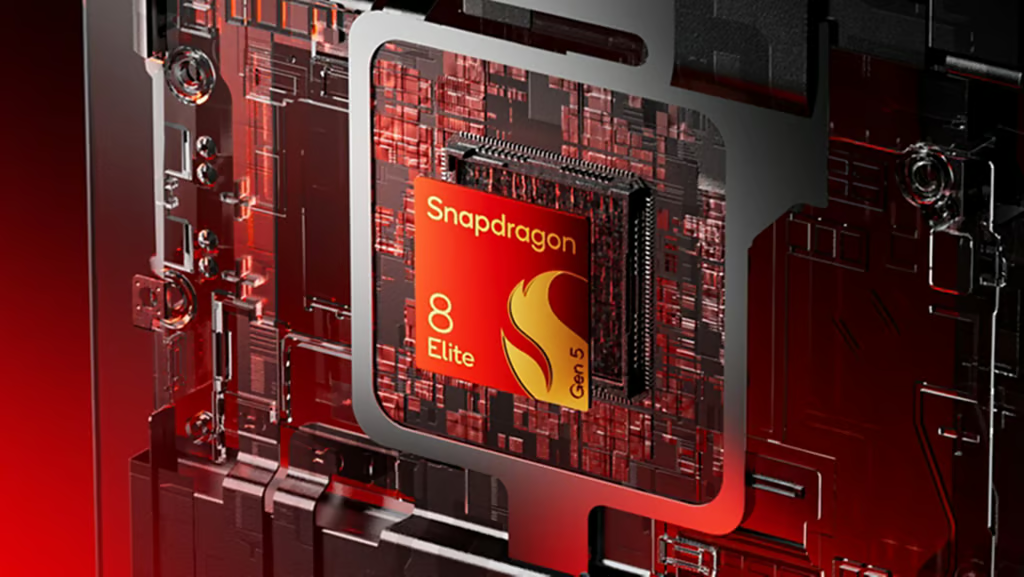
“With Snapdragon 8 Elite Gen 5, you are at the center of your mobile experience. It enables personalized AI agents to see what you see, hear what you hear, and think with you in real time.”
Learn about the latest Internet of Things protocols and standards in 2023. This guide covers the different protocols, standards, and use cases for IoT.
Datamation is the leading industry resource for B2B data professionals and technology buyers. Datamation's focus is on providing insight into the latest trends and innovation in AI, data security, big data, and more, along with in-depth product recommendations and comparisons. More than 1.7M users gain insight and guidance from Datamation every year.
Advertiser Disclosure: Some of the products that appear on
this site are from companies from which TechnologyAdvice
receives compensation. This compensation may impact how and
where products appear on this site including, for example,
the order in which they appear. TechnologyAdvice does not
include all companies or all types of products available in
the marketplace.